
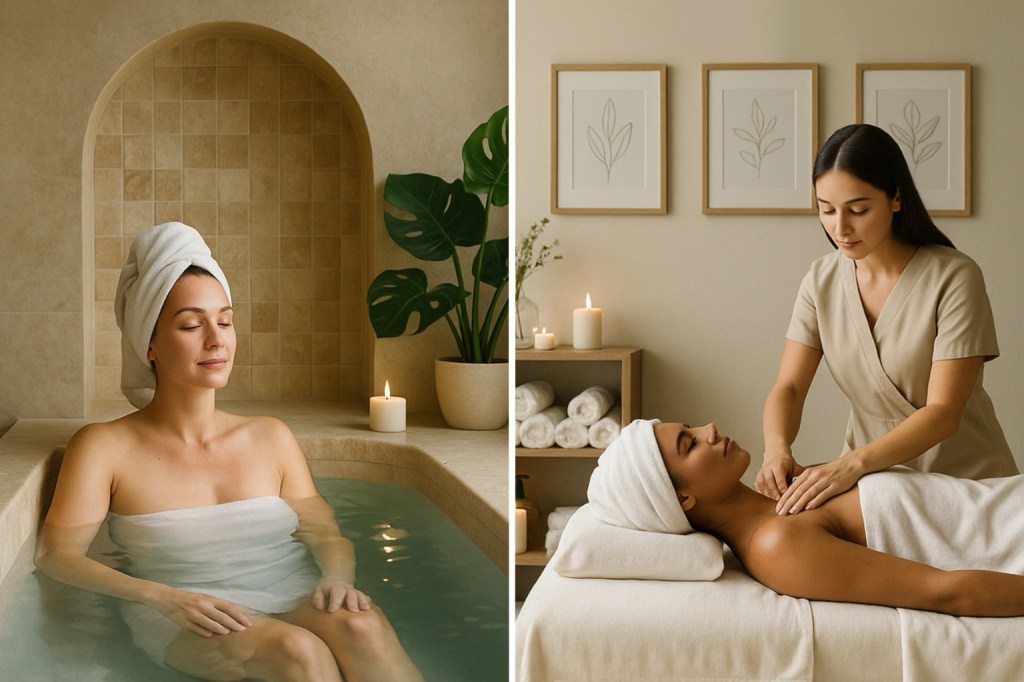
It is helpful to know how different people define the word “spa,” especially if you find yourself abroad. Knowing the difference can help temper your expectations when visiting a spa and understand what services are available.
The term “spa” can take on different meanings depending on who you ask. Europeans typically define spas as relaxation destinations focused on healing, water-based therapies, also known as balneotherapy. These may include naturally occurring hot springs, mineralized pools, hot tubs, and saltwater therapies, with or without additional hands-on body treatments. In contrast, North Americans tend to view spas (often referred to as day spas) as places primarily dedicated to wellness and beauty treatments, particularly skin care and body care, which don’t necessarily include hydrotherapy. This can lead to some surprised and disappointed European guests at places like the New York City spa I worked at, where we had to regretfully inform them that the spa lacked a pool or hot tub!
When it comes to the origins of the term, I’ll give it to the Europeans. The word “spa” is rooted in ancient European history, with two widely debated theories. One theory suggests it’s an acronym for the Latin phrase “sanitas per aquam,” meaning “health through water,” a reference to the healing properties of the mineral waters that were central to Roman bathhouses. The more widely accepted origin, however, is that spas were named after the Belgian town of Spa, famous for its healing mineral springs dating back to the classical era which grew in popularity during the Middle Ages. Over time, the name became synonymous with the waters themselves.
For me personally, having grown up in the United States, I consider a destination a true “spa” when it offers a minimum of skin care and body treatments without necessarily including additional forms of hydrotherapy; while plunge pools and hot tubs are wonderful features, their availability does not make or break my overall spa experience. Other beauty or wellness treatments can be offered, but skin care and body therapies, at least for me, are the baseline, and I believe the experience needs to transcend mere service to become deeply luxurious and relaxing. Based on these criteria, I choose to explore destinations that offer a well-rounded array of services, with an emphasis on skin care and massage, while also venturing into unique offerings that elevate the experience. To me, the essence of a spa experience lies in the combination of relaxation, rejuvenation, and personal care. Whether rooted in water-based traditions or focused on beauty and wellness treatments, a true spa offers more than just a service, it creates an immersive retreat for the body and mind.
Stay tuned for my spa experience series that feature local North Carolina spas, what they have to offer, and my overall sensory experience as a neurodivergent person.

Let me know your thoughts