In therapy the other day, I said something that surprised even me, “I don’t actually know who I am.”
Not in the philosophical, dreamy kind of way. Not in the way people muse over zodiac signs or Enneagram types or try to reinvent themselves in a new decade. This was something deeper. Heavier. More hollow. It was the kind of realization that settles in your bones.
After a lifetime of masking, of learning how to mirror, adjust, perform, and protect, I’ve peeled back so many layers that I’ve arrived at…nothing. Or at least that’s how it feels. Like there’s just this quiet, empty space where someone should be.
Where I should be.
What Masking Is and Why We Do It
Masking, for those unfamiliar, is the act of camouflaging your natural self in order to fit in, stay safe, or be accepted. It’s not something most of us consciously decide to do, it’s something we learn to do, often from a very young age.
It starts with little things. Holding back when you’re too excited. Mimicking what other kids are doing so you don’t get singled out. Forcing eye contact even though it makes your skin crawl. Laughing when others laugh, even if you don’t get the joke. Staying quiet when you need help because asking would make you “too much.”
And then, before you realize it, the mask becomes part of your face.
It becomes automatic. In every room, with every person, a new version of yourself appears, carefully constructed and cautiously curated. Not quite false…but not quite you, either.
How We Learn to Mask and Why It Feels Safer Than Being Ourselves
Masking doesn’t always look like a total personality swap. Often, it’s a quiet edit, an invisible correction we make in real time, just to stay safe, accepted, or unnoticed. We learn to mask early, through both subtle cues and loud consequences:
When we’re told we’re “too sensitive,” we learn to suppress our emotions.
When we’re mocked for stimming, fidgeting, or being “weird,” we learn to sit still and shrink.
When meltdowns are punished instead of supported, we learn to bottle things up until they boil over alone.
When peers get affection or praise for things we don’t understand, we learn to mirror them, just to belong.
When adults only praise us for being quiet, high-achieving, or easy to manage, we learn that love is conditional.
Even kindness can be a trap. We learn early that “good behavior” earns affection, but our full selves? Not always.
So we mask. Not because we want to deceive, but because being real didn’t feel safe.
What Happens When We Don’t Mask
And yet, as much as masking becomes second nature, it doesn’t come without consequence. We’re not machines. We’re not characters in someone else’s story. We’re human. And when our authenticity is punished over and over, we internalize a painful belief:
“My real self is not welcome here.”
So what happens when we don’t mask? We’re often misunderstood, labeled, punished, or excluded:
A child who melts down is called defiant.
A teen who isolates is called antisocial.
A woman who sets boundaries is labeled difficult.
A man who cries is told to “man up.”
A neurodivergent adult who shuts down is accused of not trying hard enough.
There is a real cost to showing up authentically in a world that wasn’t built with you in mind. And so, we keep the mask on. Until one day, it becomes unbearable.
The Cost of Chronic Masking
Masking helps us survive, but it also slowly erodes the connection we have with ourselves. We start to lose track of our preferences: what we actually like, feel, believe, or want. We hesitate when someone asks our opinion, defaulting to “I don’t know,” not because we’re unsure, but because we’ve learned that honesty is risky.
Eventually, we stop checking in with ourselves altogether. We become experts at reading a room, but strangers to our own needs. We excel at being liked but feel invisible. We live in a constant state of performance—exhausted, disconnected, and hollow.
And when the mask finally slips (through therapy, burnout, diagnosis, or sheer emotional fatigue) we’re left standing in unfamiliar skin. It’s like waking up in a stranger’s house and realizing the stranger is you.
The Empty Shell
I don’t know how long I’ve been masking. I don’t think I ever wasn’t.
Even as a child, I remember feeling like I had to keep parts of myself tucked away for being too sensitive, too intense, too weird, or too much. I learned quickly what versions of me were safe to show, and which ones were better off hidden.
Over time, I got really good at being whoever I needed to be in the moment. The peacemaker. The overachiever. The agreeable one. The one who doesn’t make things awkward. The one who swallows their needs so no one else has to feel uncomfortable.
And the thing is…it worked. On the outside, I looked like I was functioning. Sometimes even thriving. But on the inside? I was disappearing. For years, I’ve tried to put words to that quiet ache inside me. And the phrase I kept coming back to, over and over again, was this:
“I feel like my soul is dying.”
It’s a kind of spiritual malnourishment: when you’ve gone too long without being truly seen, heard, or allowed to exist as you are. You start to feel like a ghost inside your own life. The outer shell might be going through the motions, but the inner self is starving—craving authenticity, connection, and relief. And eventually, that hunger becomes unbearable.
Now, sitting in therapy, peeling back the layers of what I’ve learned to be, I’ve realized just how many parts of myself I’ve lost along the way. The scary truth is I don’t know what I like, what I believe, or what brings me joy without the filter of other people’s expectations.
When the mask comes off, it doesn’t always reveal a vibrant, fully formed self underneath. Sometimes it reveals silence. Sometimes it reveals grief. Sometimes, it just reveals…space. I feel like an empty shell. Like I’ve spent so long building personas that I forgot to build a relationship with myself. And now that the performance is over, I’m backstage, alone, not sure who I am when the spotlight’s off.
The Sacred Space of Beginning
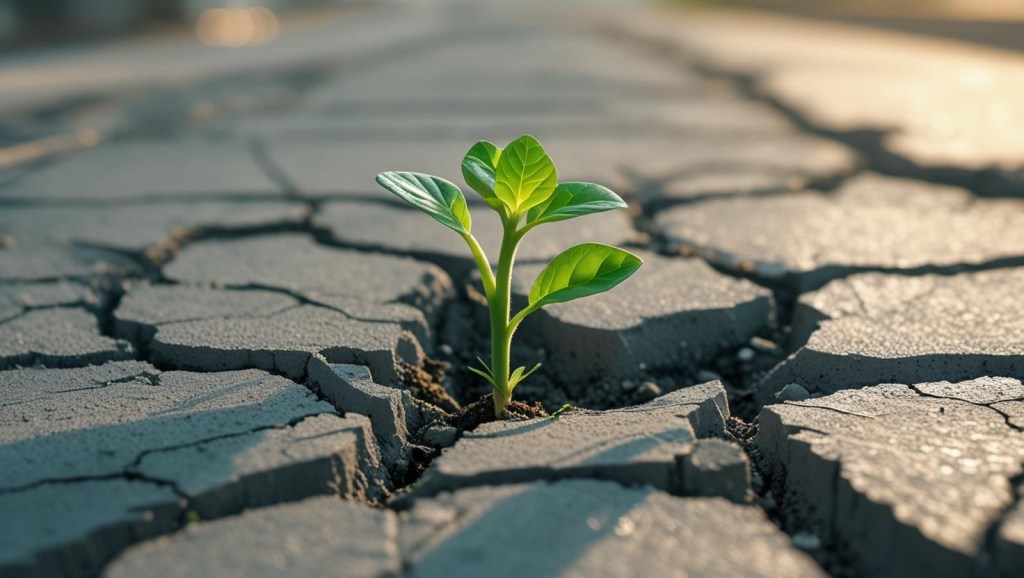
But here’s what I’m learning: this emptiness I feel? It isn’t the end of me.
It’s the beginning.
The shell isn’t proof that I’m broken. It’s proof that I’m shedding something that was never mine to carry. Yes, it feels empty. Yes, it feels terrifying. But it’s also a blank canvas. A clearing. A quiet field where my true self can finally begin to take root, gently, without performance or pressure.
This time, I don’t want to build another mask. I want to build a home within myself. One that feels soft, honest, and whole. Even if I don’t know what that looks like yet, I trust that every small choice I make in alignment with my truth will bring me closer to it.
An Invitation to the Unmasked
If you’re reading this and nodding with tears in your eyes, please know that you’re not alone.
You are not failing for feeling lost. You are not broken because you’re unsure. You are waking up to yourself after a lifetime of survival, and that is a sacred, courageous thing. So I’ll leave you with the same question I’m gently asking myself:
Who are you when no one is watching?
Not who you’re supposed to be. Not who others need you to be. Just… you. It’s okay if you don’t have an answer yet.
Let’s find out together.
Reflective Journal Prompts
What parts of myself have I been hiding, and why?
When do I feel most comfortable being truly myself, even in small ways?
What feelings or thoughts come up when I imagine living without the need to mask?
What is one small thing I can do this week to nurture my authentic self?
How can I offer compassion to the parts of me that feel lost or empty right now?
Affirmations for Unmasking and Healing
I am worthy of love exactly as I am—mask and all.
It’s safe for me to take off the mask, one layer at a time.
My authentic self is waiting patiently for me, ready to be known and embraced.
I am learning to listen to my inner voice and honor my true feelings.
Every step I take toward myself is an act of courage and kindness.
I give myself permission to feel, to heal, and to grow in my own time.
Thank you for sitting with me in this vulnerable space. Unmasking isn’t easy; it’s a slow, sometimes messy journey of falling in love with yourself again. But every step, no matter how small, is a brave act of reclaiming your truth and your soul.
Remember: you are more than the roles you’ve played, the masks you’ve worn, or the expectations you’ve met. Beneath it all is a unique, beautiful essence that deserves to be seen, heard, and celebrated, starting with you.
So be gentle with yourself. Take your time. And know that I’m here, walking this path alongside you.
With love and light,
Sara the Spatistic Traveler

Let me know your thoughts