
Literal thinking may make some social cues harder to interpret, but clear signs of sketchy massage places and behaviors are real and important to recognize. Stay informed, listen to your gut, and always prioritize your safety and well-being. You deserve that care, without compromise.
The Double-Edged Sword
If you’re autistic like me, you might already know how literal thinking can shape the way we see and experience the world. For many of us, sarcasm, innuendo, and indirect social cues don’t always register the way they do for neurotypical folks. We tend to take things at face value, which is a wonderful clarity in many situations, but it can also leave us vulnerable in places where reading between the lines is key.
Take, for example, visiting a massage establishment. On the surface, it seems straightforward: you get a massage to relax and care for your body. But sometimes, subtle signs and “red flags” might be overlooked because they’re not spoken outright or are hidden in layers of implied meaning. When sarcasm or suggestive language is used, or when social cues are indirect, literal thinking can make it hard to recognize when something feels “off.”
I want to share some practical signs that can help you identify if a massage place might not be what it seems because sometimes, sketchy establishments use subtle signals that don’t always feel like clear danger bells. And while this is true for anyone, I know from experience that it’s extra important for those of us who process the world more literally.
Red and Yellow Flags to Watch For:
Open 24 hours or offer very late-night appointments (often a sketchy indicator);
Cash only payments (yellow flag, not always bad, but suspicious);
Sexually suggestive language in marketing materials;
Female clients are generally turned away, or appointments for female clients are nearly impossible to get;
Windows are completely blacked out (yellow flag, as in some sunny places like Arizona or Florida this might just be for temperature control);
No or very limited online reviews, especially no female client reviews, or no website at all;
Female staff dressed in overly suggestive clothing;
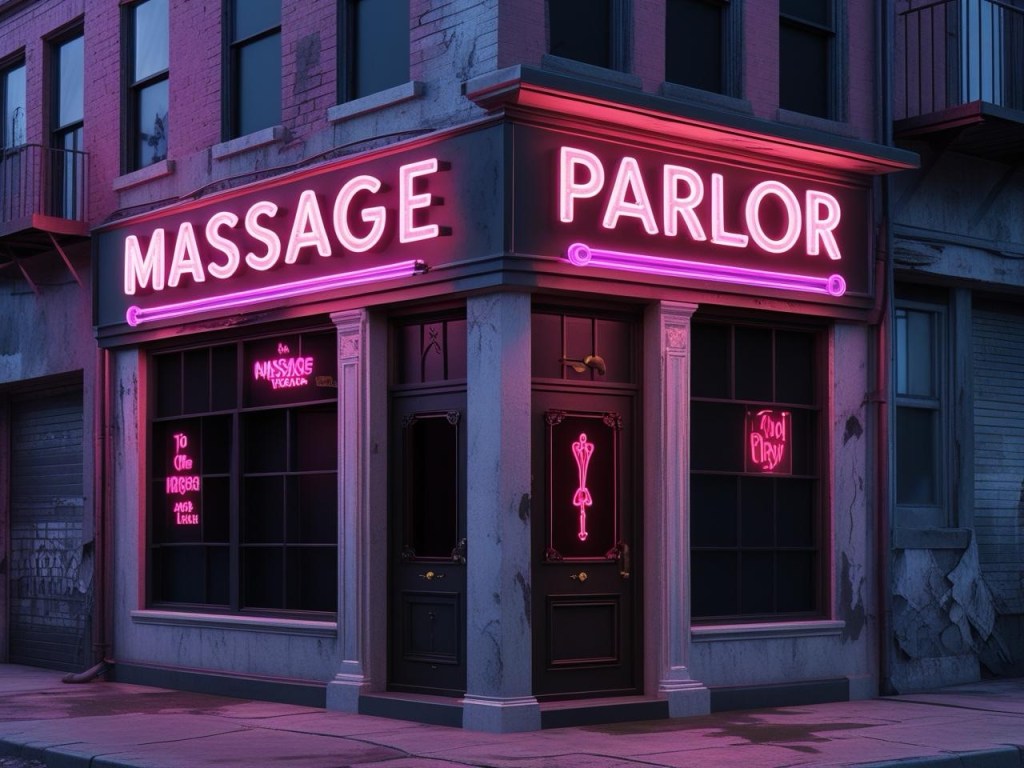
The place calls itself a “massage parlor” and staff are called “masseuses” (which can sometimes be a red flag. The proper term is “massage therapist”);
The establishment is not licensed (yellow flag, always check!);
The place looks dirty or unkempt (yellow flag for sketchiness, red flag for overall experience);
Front desk or management is avoidant, rude, or gets defensive when asked questions;
Staff is advertised mainly based on their looks or physical attributes;
Towels are used for draping instead of proper sheets;
Draping is inappropriate or inadequate (your private areas should never be exposed);
Any form of sexual assault during the massage;
Staff offering “extra services” during the massage session;
Staff with limited English skills in ways that feel suspicious or combined with other red flags (yellow flag);
The Wolf in Sheep’s Clothing
Unfortunately, even some high-end places can sometimes have staff or individuals who behave inappropriately. So it’s also important to recognize red flags at the therapist level during your session:
Commenting repeatedly on your body in ways that feel uncomfortable;
Improper draping exposing genitals, breasts, or buttocks;
Therapist resting or rubbing their groin or breasts against your body;
Repeatedly touching sensitive areas like your butt crack, anus, breasts, or genitals without consent;
Performing gluteal or pectoral massage without asking permission first (it’s okay if asked, but always with proper draping);
Ignoring your requests to avoid certain areas;
Positioning your body to graze or touch their private areas inappropriately;
Grinding or humping motions against the massage table or your body;
Any form of sexual assault such as kissing, groping, or penetration;
Therapist straddling or climbing on top of you (yellow flag; in certain types of massage like Ashiatsu barefoot massage, the therapist uses their feet to massage you);
Removing your undergarments without permission;
Therapist contacting you privately after your session (yellow flag, as some entrepreneuer therapists do not rely on support staff to do this. Otherwise this should be done professionally via the business)
The Importance of Trusting Your Gut
I speak from personal experience when I say this can be deeply unsettling. I once worked with a colleague who was later charged with sexual assault on a client, someone I never would have suspected. Another had troubling reviews from a previous job about inappropriate behavior. It shook me to my core.
If you ever feel uneasy or suspect sexual impropriety during or after a session, please trust your instincts. You deserve to be safe and respected. Don’t hesitate to report the incident to the establishment, the licensing board, and the police. If it happened to you, chances are it has happened to others, and only action will help protect future clients.
Your comfort and safety matter. And while literal thinking can sometimes make social puzzles harder to navigate, you can still protect yourself by knowing what to look for and listening to your inner voice.

